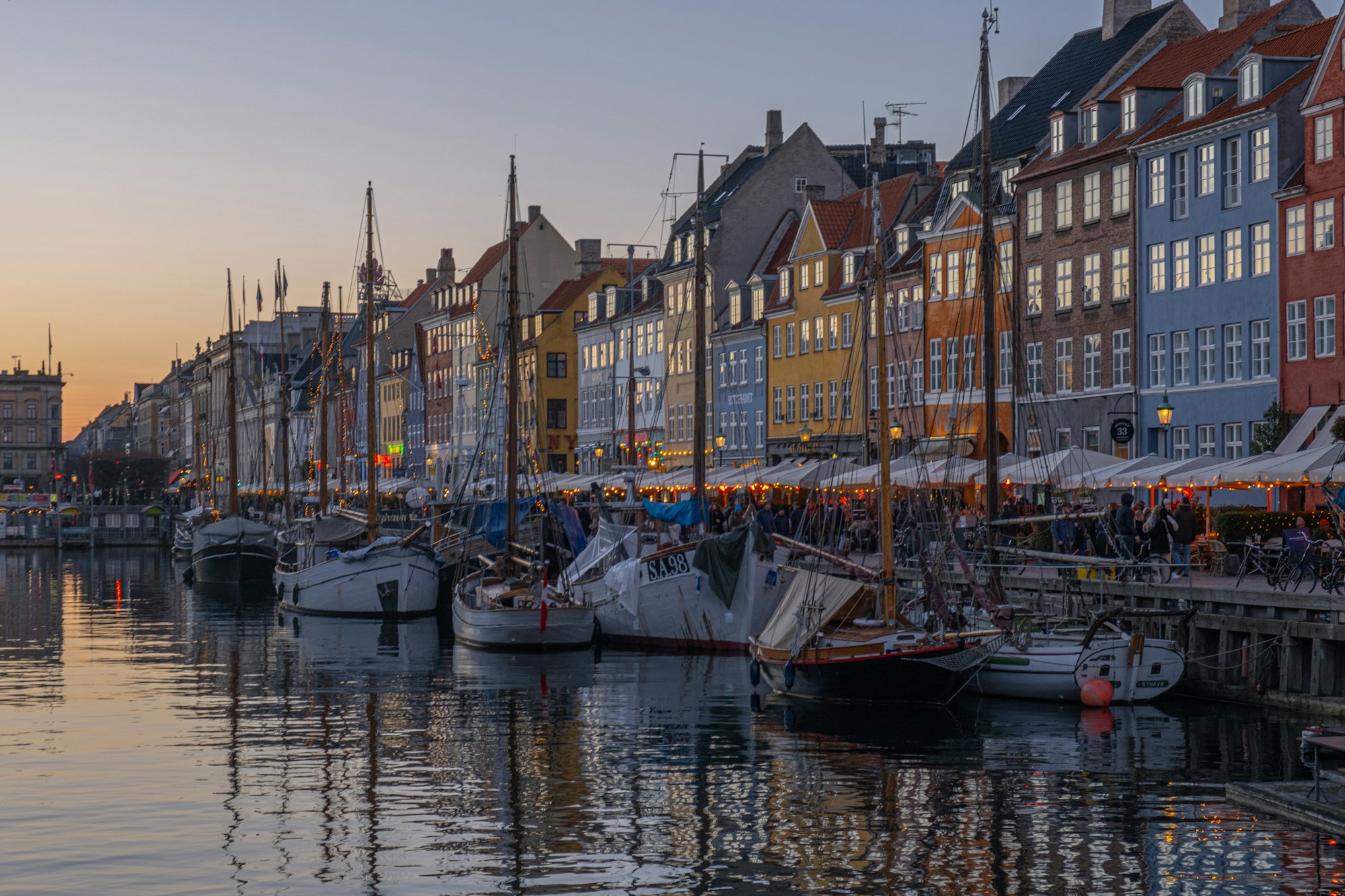
boats docked in a harbor
i

City guide

Copenhagen city guide: itinerary, costs and local tips

One Copenhagen plan for three to five days, grouped by area: Nyhavn, Amalienborg and the royal quarter, Rosenborg and the old town, Christianshavn and the harbour by bike. Days 1–3 are the core trip; days 4 and 5 add Kronborg castle in Helsingør with the Louisiana museum on the way, and a slow day in Roskilde with its cathedral and Viking ships. Food is strictly Danish — smørrebrød, frikadeller, stegt flæsk, pølser from a pølsevogn, kanelsnegl and wienerbrød. The budget covers what you spend on the ground; accommodation is shown separately.

Couples and first-time visitors staying three to five days who want royal palaces, harbour life, cycling and traditional Danish food — and want honest numbers for a pricier city.

Share this guide:

Free offline PDF pocket guide

Get the full Copenhagen plan — day by day, official prices, transport tips and red flags — on your phone with no internet or roaming needed.

Where to sleep

A mid-range hotel in Vesterbro or Nørrebro — Both are 10–15 minutes by bike from the centre and noticeably cheaper than the harbour. Not included in the budget below. Budget around €170 per night for two.

Day by day

Days 1–3 are the core trip. Staying longer? Days 4–5 carry on from the same base, with their own cost breakdown below.

  1. Day 1 — Nyhavn, Amalienborg and the royal quarter

    ~€200
    Morning.
    Nyhavn at 08:30, before the canal boats fill, then a kanelsnegl and coffee at a local bakery. Walk to Amalienborg for the changing of the guard at 12:00.
    Afternoon.
    The Marble Church (Frederiks Kirke, free; dome tour extra), then the harbour promenade to Kastellet, the star-shaped fortress — free and much quieter.
    Evening.
    Dinner of traditional Danish food: stegt flæsk med persillesovs (the national dish) or frikadeller in a family-run frokost restaurant in the old town.
  2. Day 2 — Rosenborg, Rundetaarn and Christiansborg

    ~€220
    Morning.
    Rosenborg Castle at opening for the Crown Jewels (book a timed ticket on kongernessamling.dk), then the King's Garden next door.
    Afternoon.
    Smørrebrød lunch — two or three open sandwiches each is plenty. Then the Round Tower (Rundetaarn) ramp and Christiansborg's free tower for the rooftop view.
    Evening.
    Tivoli Gardens, opened in 1843 — go after dark, when the lamps are lit. Buy entry online; rides are paid separately.
  3. Day 3 — Christianshavn and the harbour by bike

    ~€200
    Morning.
    Rent bikes and ride over the harbour bridges to Christianshavn's canals. Climb the spiral spire of Vor Frelsers Kirke for the view.
    Afternoon.
    Torvehallerne market for Danish cheese, rye bread and smørrebrød, then a summer swim at the Islands Brygge harbour bath (free).
    Evening.
    A pølse from a pølsevogn on the way home, or a Danish dinner along Jægersborggade in Nørrebro.
  4. Day 4 — Kronborg and Louisiana up the coastif you stay longer

    ~€230
    Morning.
    Regional train north to Helsingør (about 45 minutes) for Kronborg, the Renaissance castle of Hamlet and UNESCO World Heritage.
    Afternoon.
    Stop at Humlebæk on the way back for the Louisiana Museum of Modern Art — the Danish building and sculpture park on the Øresund are the reason to go.
    Evening.
    Back in the city for a quiet neighbourhood meal of fiskefrikadeller or a fish plate.
  5. Day 5 — Roskilde: cathedral and Viking shipsif you stay longer

    ~€200
    Morning.
    Train to Roskilde (about 25 minutes). Roskilde Cathedral, burial place of the Danish monarchs and UNESCO World Heritage.
    Afternoon.
    The Viking Ship Museum on the fjord, with five original 11th-century ships, then a walk by the water.
    Evening.
    Back in Copenhagen for a final harbour walk and one last Danish dinner.

What it costs

Food and drink
€360
Sights and museums
€150
Local transport and bikes
€65
Buffer
€45
Total for 2 travellers
€620

Estimates for 3 days in Copenhagen, excluding flights and accommodation. Always confirm live prices and opening hours before you book.

Staying 5 nights instead

Five days adds a coastal train day to Kronborg and Louisiana and a day in Roskilde. Accommodation is not included: budget roughly €140–200 a night for a mid-range double.

Food and drink
€600
Sights and museums
€270
Local transport, bikes and regional trains
€115
Buffer
€65
Total for 2 travellers
€1,050

Like this rhythm? Get one built around your dates, budget and interests.

Plan my Copenhagen trip →

Before you fly

The things worth sorting early

Nothing here is required — it is simply the order most travellers wish they had booked things in.

Best time to visit Copenhagen

Spring (Apr–May)

Recommended
  • 9–16°C
  • Moderate crowds
  • Normal rates

Blossom and lengthening days.

Summer (Jun–Aug)

Peak season
  • 18–22°C
  • High crowds
  • Highest rates

Harbour swims and very long evenings.

Autumn (Sep–Oct)

Recommended
  • 10–16°C
  • Moderate crowds
  • Good value

Cosy season and fewer visitors.

Winter (Nov–Mar)

Budget-friendly
  • 1–5°C
  • Low crowds
  • Lowest rates

Tivoli Christmas and hygge cafés.

June to August for harbour swimming and light until late. May and September are cheaper and still pleasant; November to February is dark and quiet, with Christmas markets and the lowest hotel rates.

Getting in from the airport

Cheapest.
Metro M2 from the airport to Kongens Nytorv: a 3-zone ticket, roughly €4.50–5, about 15 minutes.
Fastest.
The same metro — a taxi takes about 20 minutes and costs around €35–45.

Where to stay in Copenhagen

Vesterbro.
local restaurants and cafés, 10 minutes to the centre — around €150–200 a night for two.
Nørrebro.
better value, local life, easy cycling — around €140–190 a night for two.
Indre By.
everything on foot, the highest rates — around €200–280 a night for two.

Getting around

A rented city bike (about €12–15 a day) is the fastest way around the centre. Metro and buses use the same zone tickets; a 24-hour City Pass covers zones 1–4 including the airport. Regional trains go to Helsingør and Roskilde.

What to skip

  • Some visitors mention that the Little Mermaid statue feels smaller than expected; if time is short, combine it with Kastellet rather than making a separate trip.
  • Some reviews mention higher prices at a few restaurants directly on the Nyhavn quayside; you may also enjoy the lanes a few minutes away for a traditional frokost.

Deep Research: verified sights & local spots

What travellers consistently praise and warn about, checked against recent reviews.

Rosenborg Castle

Very positive
  • + The Danish Crown Jewels in the treasury
  • + Renaissance interiors and the King's Garden next door
  • ⚠ Some visitors mention narrow rooms that feel busy at midday
  • ⚠ Timed tickets can sell out in summer

Insider tip. Go at opening and see the treasury in the basement first, before the groups arrive.

Book tickets

Tivoli Gardens

Positive
  • + One of the oldest amusement gardens in the world (1843)
  • + Beautiful in the evening and at Christmas
  • ⚠ Some reviews mention that rides and food add up quickly on top of entry
  • ⚠ Seasonal closures — check the calendar

Insider tip. Buy entry only and walk the gardens after dark; add a ride pass only if you really want the rides.

Book tickets

Kronborg Castle, Helsingør

Very positive
  • + Renaissance castle and UNESCO site, the setting of Hamlet
  • + Casemates under the castle
  • ⚠ A full day with the train — some travellers found it tiring with Louisiana the same day

Insider tip. Bring a torch on your phone for the dark casemates and look for the statue of Holger Danske.

Book tickets

Smørrebrød at a traditional frokost restaurant

Very positive
  • + Denmark's signature open sandwich on rye bread
  • + Herring, roast pork, egg and shrimp classics
  • ⚠ Prices vary a lot between places, according to reviews — you may want to check the menu before sitting down

Insider tip. Order in the traditional sequence: herring first, then fish, then meat — and two or three pieces each is plenty.

Find on Google Maps

Torvehallerne market

Positive
  • + Danish cheese, rye bread, fish and smørrebrød under one roof
  • + Good for a quick lunch
  • ⚠ Some visitors note it can be crowded and seating limited on Saturdays

Insider tip. Go on a weekday late morning and stick to the Danish counters: smørrebrød, fish and bakeries.

Find on Google Maps

Pølsevogn (hot-dog stand)

Positive
  • + A Danish street-food tradition since the 1920s
  • + Quick, inexpensive and very local
  • ⚠ Quality varies from stand to stand, according to some reviews

Insider tip. Ask for a ristet hotdog med det hele — toasted sausage with remoulade, crispy onions and pickles.

Find on Google Maps

AI-generated synthesis of public reviews (Tripadvisor, Google Maps, Booking.com, Reddit); not Wayfare.live's opinion. Last AI analysis update: October 2026 · Review & rating disclaimer

Staying longer?

With a week add Frederiksborg Castle in Hillerød and a day on the coast at Dragør, the old fishing village south of the city.

Different number of days? Build a plan for exactly your trip length.

Plan my Copenhagen trip →

Copenhagen for couples: romantic spots

Copenhagen is calm, safe and made for slow evenings by the water.

Nyhavn at sunrise.
The coloured houses with almost no one around, before 08:00.
Kastellet ramparts.
A quiet walk on the grassy walls of the star fortress, with windmill and harbour views.
Tivoli after dark.
Thousands of lamps over the lake — the city's most romantic hour.
Vor Frelsers Kirke spire.
The outdoor spiral staircase at sunset, with the whole city below.

Share a smørrebrød lunch, then a slow Danish dinner of stegt flæsk or a fish plate with a local beer or akvavit.

Seeing Copenhagen without feeling rushed

Copenhagen is flat and compact. Plan one area a day and let the bike do the rest.

Early mornings.
Nyhavn and Rosenborg are calmest before 10:00.
Book timed tickets.
Rosenborg and Tivoli are easier with online tickets in summer.
Lunch is the value meal.
Smørrebrød at lunch costs far less than a full dinner.
Check Monday closures.
Several museums close on Mondays — plan the day trips then.

What 3 days in Copenhagen costs for two

What two travellers spend on the ground in Copenhagen over three days, accommodation excluded.

Food and drink
€360

Smørrebrød lunches, bakery breakfasts, two Danish dinners, a pølse and coffee.

Sights and museums
€150

Rosenborg, Tivoli entry and Rundetaarn for two; Christiansborg tower and Kastellet are free.

Local transport and bikes
€65

Airport metro both ways and one or two days of bike hire.

Buffer
€45

A canal tour, a Tivoli ride, one extra coffee.

About €620 for two over three days, or €1,050 for five with Kronborg, Louisiana and Roskilde. Accommodation is not included: budget roughly €140–200 a night for a mid-range double. Prices are converted from Danish kroner — check the official sites before you go.

Worth knowing

  • Card payment works almost everywhere; you rarely need Danish kroner in cash.
  • Cyclists have priority in the bike lanes — never stand or walk in them, and always signal before stopping.
  • Tap water is excellent and free; ask for it at restaurants.
  • Check opening days on the official sites: several museums close on Mondays and Tivoli has seasonal closures.
  • Prices are converted from Danish kroner and may shift slightly with the exchange rate.

Copenhagen questions, answered

How much does a 3 day trip to Copenhagen cost for two?
About €620 for two on the ground, excluding flights and accommodation: €360 food, €150 sights, €65 transport and bikes, €45 buffer.
How much does a 5 day trip to Copenhagen cost for two?
About €1,050 for two on the ground, excluding flights and accommodation, including the Kronborg–Louisiana day and Roskilde.
How much is accommodation in Copenhagen per night?
Roughly €140–200 a night for a mid-range double in Vesterbro or Nørrebro, and €200–280 in the centre. It is shown separately from the on-the-ground budget.
Is Copenhagen expensive for tourists?
It is one of Europe's pricier capitals. Cycling, market lunches and smørrebrød instead of long dinners keep costs reasonable.
Is 3 days enough for Copenhagen?
Yes for the city itself: the royal quarter, Rosenborg, Tivoli and Christianshavn. Five days add Kronborg, Louisiana and Roskilde.
How do I get from Copenhagen airport to the city centre?
Metro M2 runs every few minutes to Kongens Nytorv in about 15 minutes; a 3-zone ticket costs roughly €4.50–5. Check current fares on dinoffentligetransport.dk.
Is the Copenhagen Card worth it?
Only if you visit three or more paid sights a day plus transport. For this plan, separate tickets and a rented bike usually cost less.
Is it worth visiting Tivoli Gardens?
Yes, especially in the evening when it is lit up. Entry and rides are paid separately, so decide in advance whether you want the ride pass.
What traditional Danish food should I try in Copenhagen?
Smørrebrød, stegt flæsk med persillesovs, frikadeller, fiskefrikadeller, pølser from a pølsevogn, rugbrød, kanelsnegl and wienerbrød.
How much does smørrebrød cost in Copenhagen?
Usually around €8–16 per open sandwich depending on the place; two or three make a full lunch.
Is it easy to cycle in Copenhagen as a tourist?
Yes — the bike lanes are wide and separated. Follow local rules: keep right, signal with your hand and use lights after dark.
Can I do a day trip from Copenhagen to Kronborg Castle?
Yes. Regional trains reach Helsingør in about 45 minutes, and you can stop at Louisiana in Humlebæk on the way back.
Can you swim in Copenhagen harbour?
Yes, in summer at the official harbour baths such as Islands Brygge, which are free. Swim only at designated spots.
When is the best time to visit Copenhagen?
June to August for long evenings and harbour swimming; May and September are calmer and cheaper; winter is dark but cosy with Christmas markets.
Do I need cash in Copenhagen?
Almost never — cards and mobile payments are accepted nearly everywhere, including pølsevogne.
How do I get from the airport into Copenhagen?
Metro M2 from the airport to Kongens Nytorv: a 3-zone ticket, roughly €4.50–5, about 15 minutes. If you would rather not carry bags on public transport: the same metro — a taxi takes about 20 minutes and costs around €35–45.
Is Copenhagen walkable?
Largely, yes — this plan is built so each day is walkable with at most a couple of short transport hops. A rented city bike (about €12–15 a day) is the fastest way around the centre. Metro and buses use the same zone tickets; a 24-hour City Pass covers zones 1–4 including the airport. Regional trains go to Helsingør and Roskilde.
Where should I stay in Copenhagen?
Vesterbro for local restaurants and cafés, 10 minutes to the centre (€150–200 a night); Nørrebro for better value, local life, easy cycling (€140–190 a night); Indre By for everything on foot, the highest rates (€200–280 a night). This plan budgets €170 a night for two.
Working to a fixed budget? Read our step-by-step guide to planning a trip on a budget.

Want this tailored to your own dates and pace?

Plan my Copenhagen trip →

Thinking about another city?

Check any place before you book

Deep Research reads thousands of real reviews of a hotel, restaurant or sight and flags the red flags for you before you commit.

Explore Deep Research

Your dates, your budget

Wayfare.live builds the same kind of plan around your own dates, budget, hotel standard and interests — with booking links for every stay, restaurant and sight.

Plan my trip
Share this guide: